How does the jawline structure change over time?

The jawline structure defines the lower face and overall face shape. Its appearance is influenced by both underlying bone and overlaying muscles, which contribute to jawline contour and definition. The structure of the jawline can influence how the face appears from different angles and works together with the chin to create lower face balance.

Anatomy of the Jawline

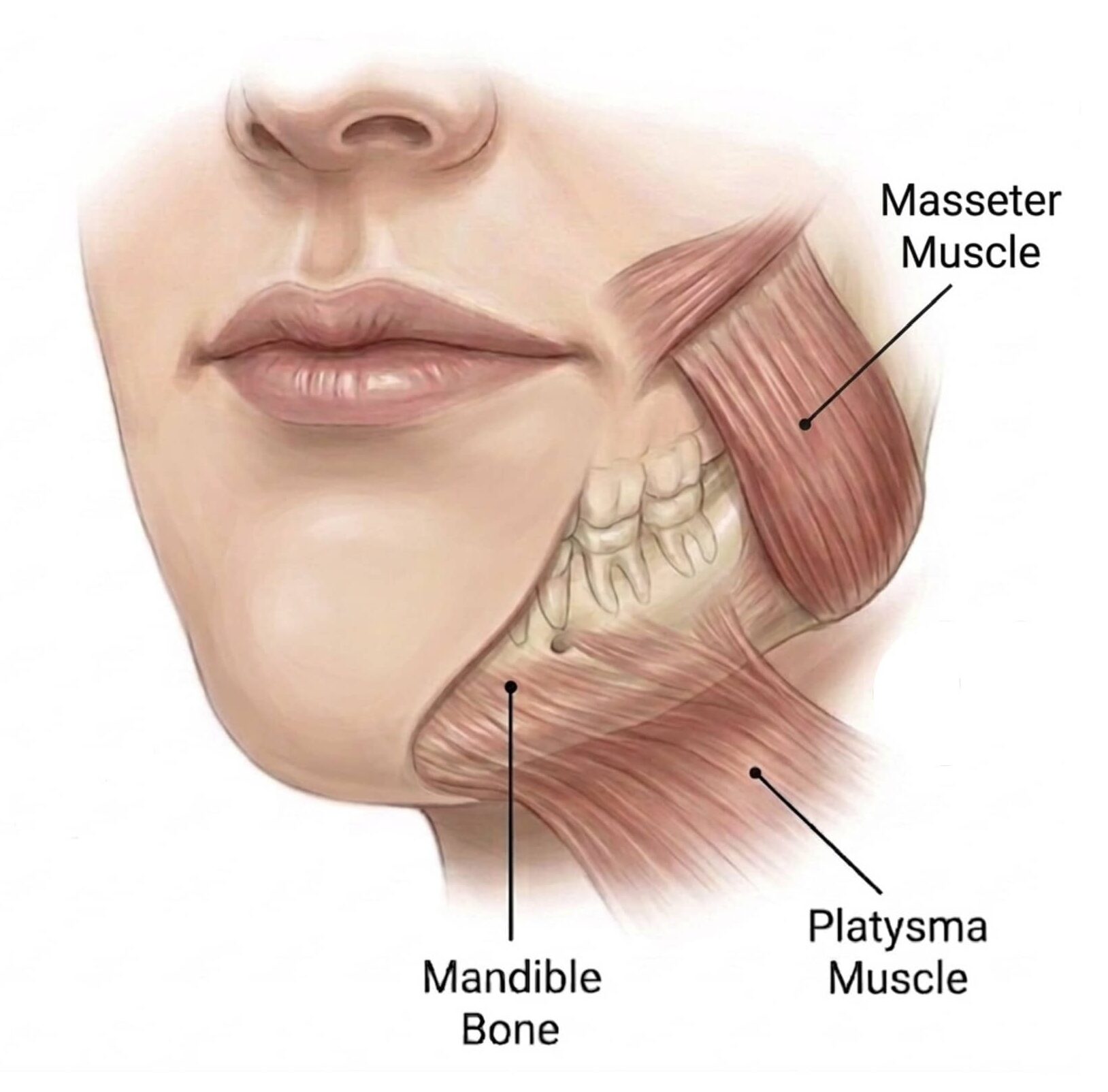
The jawline is composed of several anatomical layers, including the skin, subcutaneous tissue, underlying muscles, and bone.

The mandible forms the structural foundation of the jawline and determines its shape and projection. Overlying this, soft tissue and fat contribute to the contour and smoothness.

The masseter muscle, located at the angle of the jaw plays a key role in jaw movement and contributes to the width and shape of the lower face.

The platysma muscle extends from the lower face into the neck and contributes to the transition between the jawline and neck.

Together, these anatomical components contribute to the definition and overall appearance of the jawline.

The role of the jawline in facial balance and contour

The jawline contributes to lower facial structure. It plays a role in how the face appears from side profile and from the front, contributing to overall facial contour.


Jawline structure and support

The jawline is supported by the underlying mandibular bone, along with overlying soft tissue, and muscle. These structures work together to create the visible contour of the lower face.

Changes in these supporting structures may influence how defined the jawline appears over time.


Relationship to the chin and neck

The jawline is closely connected to both the chin and the neck. Changes in one area may influence the appearance of others. This relationship contributes to the overall transition between the face and neck and plays a role in how the lower face is perceived.


Movement and muscle activity in the jawline

The masseter muscle, along with other depressor muscles, including the platysma and the depressor anguli oris, in the lower face contribute to jaw movement and facial expression. Over time, repeated movement and changes in muscle activity may influence how the jawline appears.


Jawbone contour and skin changes over time

Changes in soft tissue support and underlying structure may affect the definition of the jawline over time. As part of the natural ageing process, the mandible undergoes bone resorption and the skin loses collagen and elastin, resulting in lack of structural support and skin laxity. This can influence how the lower face appears in relation to surrounding features.

These changes are often considered as part of broader facial structure and volume changes during a consultation.


Other contributing factors

Factors such as genetics, lifestyle, teeth grinding and clenching, and environmental exposure may influence how the jawline appears over time.

Learn the broader effects of facial aging.


How the jawline is assessed

During a consultation, the jawline is assessed in the context of overall facial proportions and balance. This may include consideration of skin quality, wrinkle formation, and facial structure, and lip volume, depending on individual concerns.

Book A Consultation

Frequently Asked Questions

The jawline defines the lower face and contributes to overall facial structure, symmetry, and contour.

Changes may occur due to shifts in bone structure from bone resorption, soft tissue support, repetitive muscle contraction influencing masseter muscle size, and natural ageing processes.

The jawline and chin work together to shape the lower face and influence overall facial proportions.

Jawline definition may be influenced by underlying bone structure, soft tissue support, subcutaneous fat, muscle activity, and natural ageing changes over time.