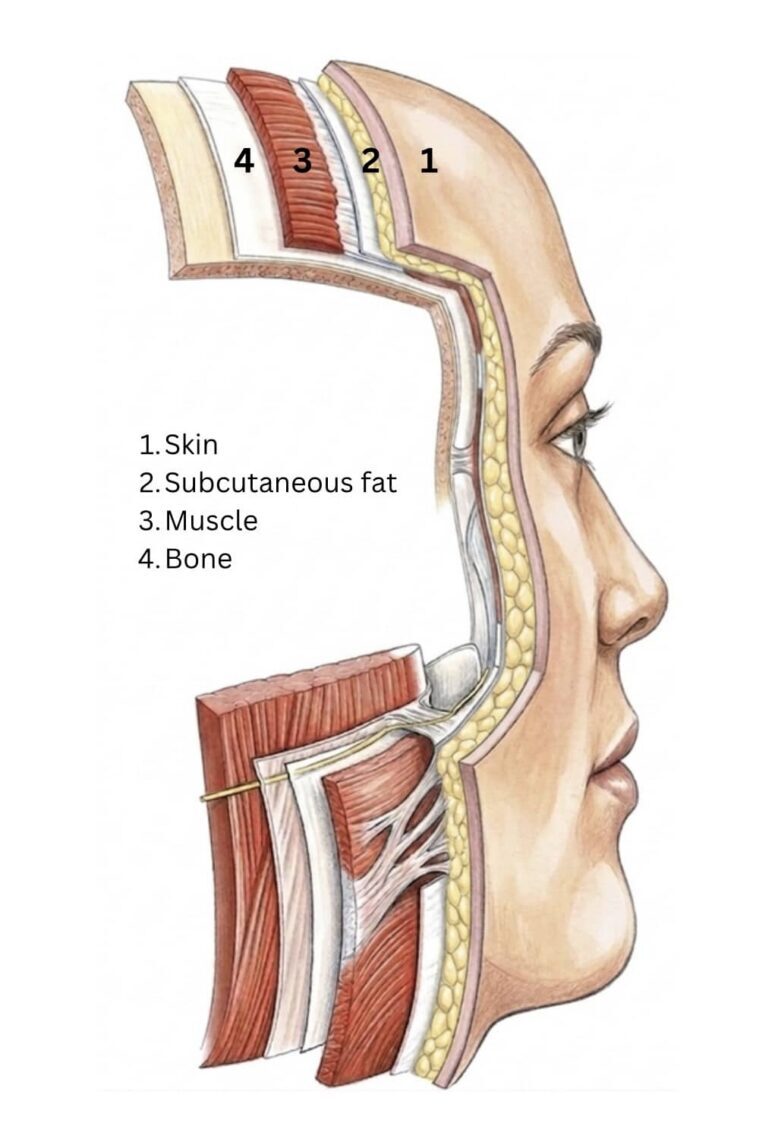
The layers of the Face
The face is made up of multiple anatomical layers that work together to support structure, movement, and overall appearance. These layers include the skin, subcutaneous fat, muscles, and bone.
Skin
The skin is the outermost layer and plays a key role in texture and elasticity. It contains structural proteins such as collagen and elastin, which help maintain firmness and resilience.
Subcutaneous Fat
Beneath the skin are fat compartments that contribute to volume, contour, and smooth transitions between facial areas. These structures help support the overlying skin and influence overall facial shape.
Muscle
Facial muscles are responsible for movement and expression. Some muscles attach to the skin and allow for expression such as smiling, frowning, and raising the eyebrows.
Bone
The underlying bone provides the structural framework of the face. It supports the overlying soft tissues and plays a key role in defining facial shape, projection, and proportions.
Each layer plays a distinct role in overall facial balance and structure. Changes in one layer may influence how other layers appear, contributing to overall changes in facial appearance over time.