How does the Neck change with age?

The neck supports the head and its appearance is influenced by skin, underlying structures, and the platysma muscle, which contributes to movement and transition between the face and neck. The neck connects to the chin and jawline. Changes in the neck over time may influence contour, definition and the appearance of neck lines, often referred to as necklace lines and neck (platsymal) bands.

Anatomy of the Neck

The neck is composed of several anatomical layers, including the skin, subcutaneous tissue, and underlying muscles.

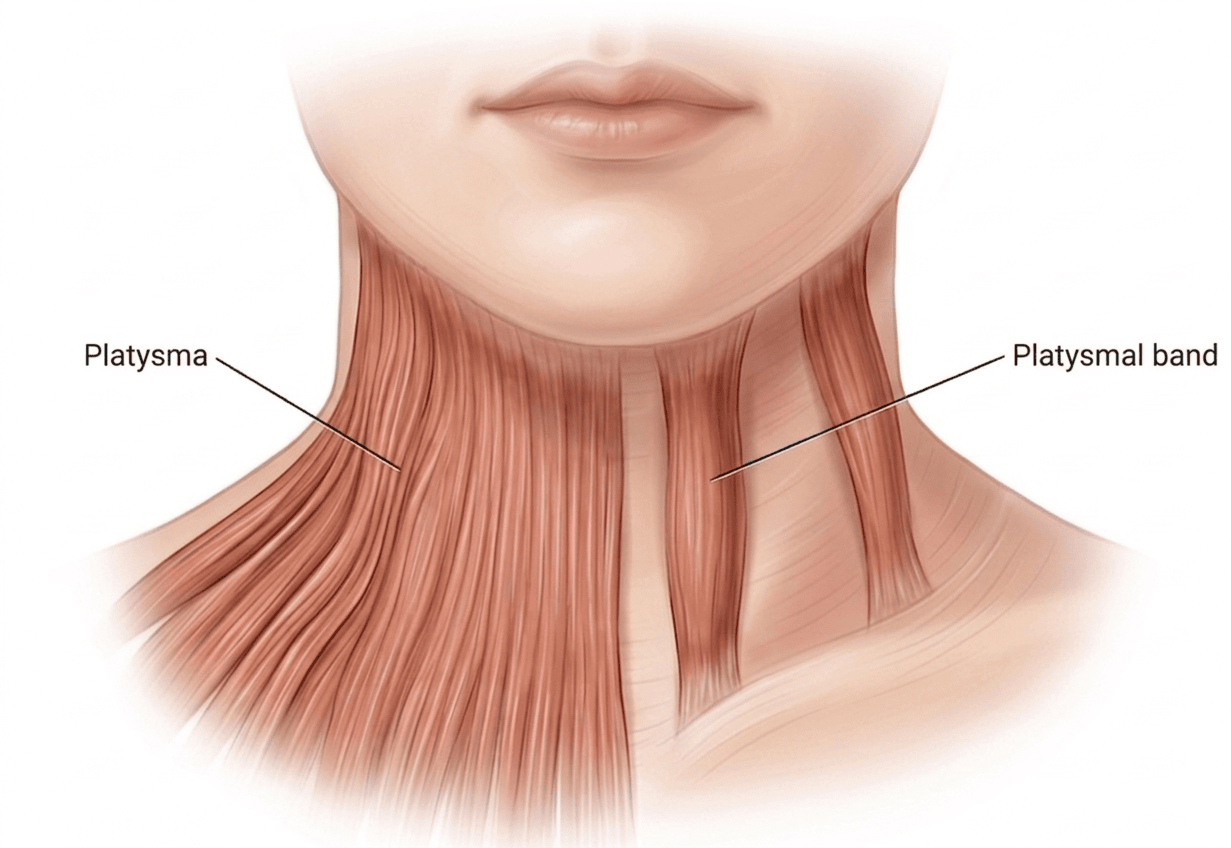
The platysma muscle is a broad, sheet-like muscle that extends from the lower face down toward the collarbone. It is a depressor muscle that pulls down when contracted and contributes to the appearance of the neck and jawline transition.

Platysmal bands are vertical lines formed by the platysma muscle that run from the jawbone to the collarbone. Neck bands are visible during muscle contraction and may become more visible with age.

Together, these anatomical components influence the appearance of the neck and how it may change over time.

Skin and Movement changes

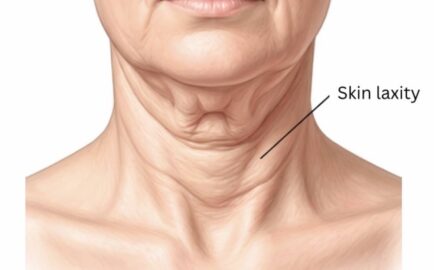
The skin of the neck is thinner and may be more susceptible to creasing and creating 'necklace lines' - horizontal bands that form around the neck from the head being in a downward position over time. Environmental factors can influence skin texture and how the area appears.

Changes in skin quality may contribute to how the neck looks over time.


Muscle activity and movement

The neck is involved in a range of movements, including head position and facial expression. Over time, repeated movement and muscle contraction may influence how the skin and neck bands appear.


What are Platysmal Bands?

Platysmal bands are vertical lines that can appear on the neck. They are formed by the platysma muscle when contracted. Over time, this muscle may become more visible due to changes in skin quality and muscle activity, creating the appearance of vertical banding in the neck.

Relationship to surrounding structures

The neck is closely connected to the chin and jawline. Changes in the neck may influence how defined these areas appear, particularly from side profile.

Understanding this relationship helps provide a more complete view of lower face balance.


Other contributing factors

Factors such as genetics, lifestyle, posture, and environmental factors may influence how the neck appears over time.

Learn more about how the neck can change over time on our facial aging page.


How the neck is assessed

During a consultation, the neck is assessed in the context of overall facial balance and profile. This may include consideration of skin quality, wrinkle formation, and facial structure, depending on individual concerns.

Book a Consultation

Frequently Asked Questions

The neck supports the skin to the jawline of the lower face and contributes to overall profile and lower face appearance.

Changes may occur due to shifts in skin quality, muscle activity, head position, underlying support, lifestyle factors, and natural ageing processes.

The neck and jawline are closely connected, and changes in one area may influence the appearance of the other.

Platysmal bands are vertical lines that appear on the neck from the platysma muscle. Over time, these neck bands may become more prominent and visible with age.