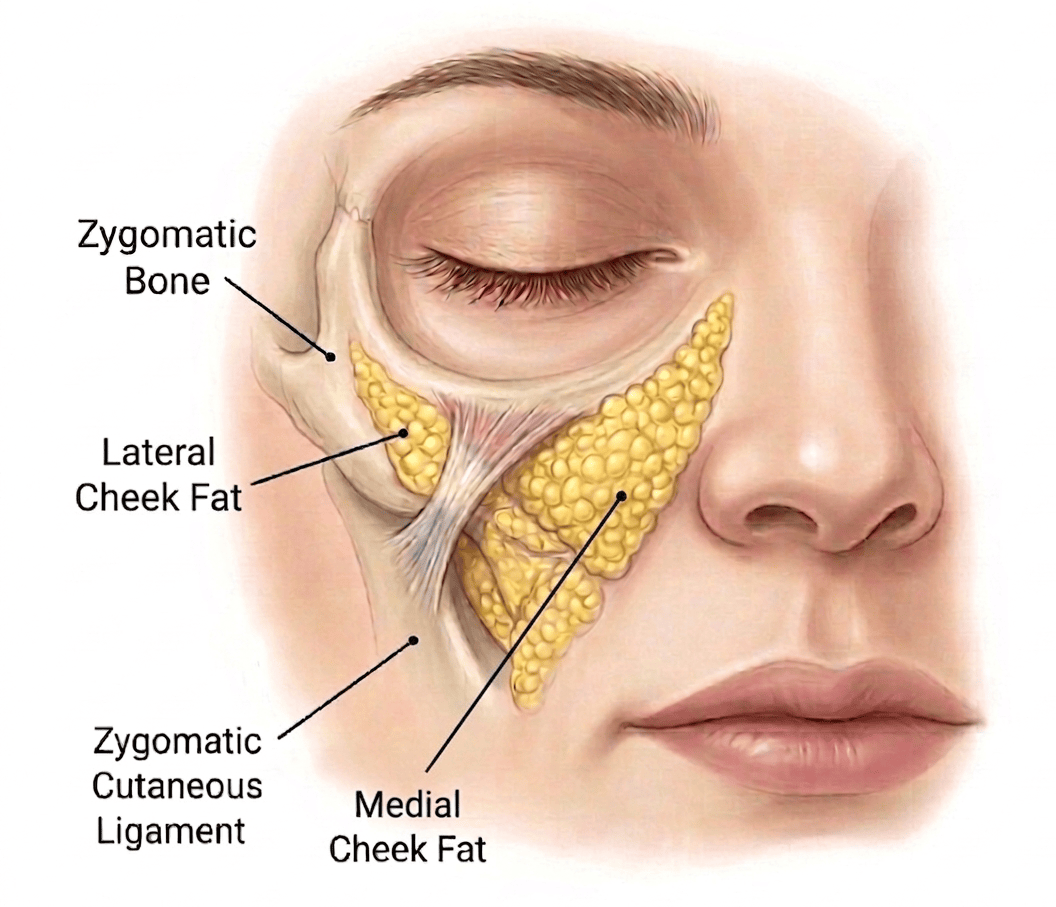
Anatomy of the Cheeks
The cheeks are composed of multiple anatomical layers, including the skin, subcutaneous fat compartments, facial muscles, and underlying bone.
Fat pads within the cheeks contribute to volume and contour, playing a key role in supporting the skin. These fat pads sit over the cheekbone and contribute to the natural shape of the mid-face.
The underlying cheekbone (zygoma) provides structural support for the overlying tissues and influences the projection and shape of the face.
Muscles involved in facial expression, including those responsible for smiling, interact with the fat pads and influence movement and cheek volume in the area.
Together, these anatomical components contribute to the overall appearance of the cheeks and how they may change over time.