What are glabellar lines?

Glabellar lines are vertical lines that develop between the eyebrows. This area is anatomically known as the glabella complex. They are commonly known as frown lines or lines between the eyebrows, and they form due to repeated facial movement, underlying muscle activity and changes in the skin over time.

These lines appear in the glabellar region, which is the area of skin located between the eyebrows and just above the bridge of the nose. Understanding the anatomy of this region can help explain why glabellar lines develop and why they may become more noticeable with age.

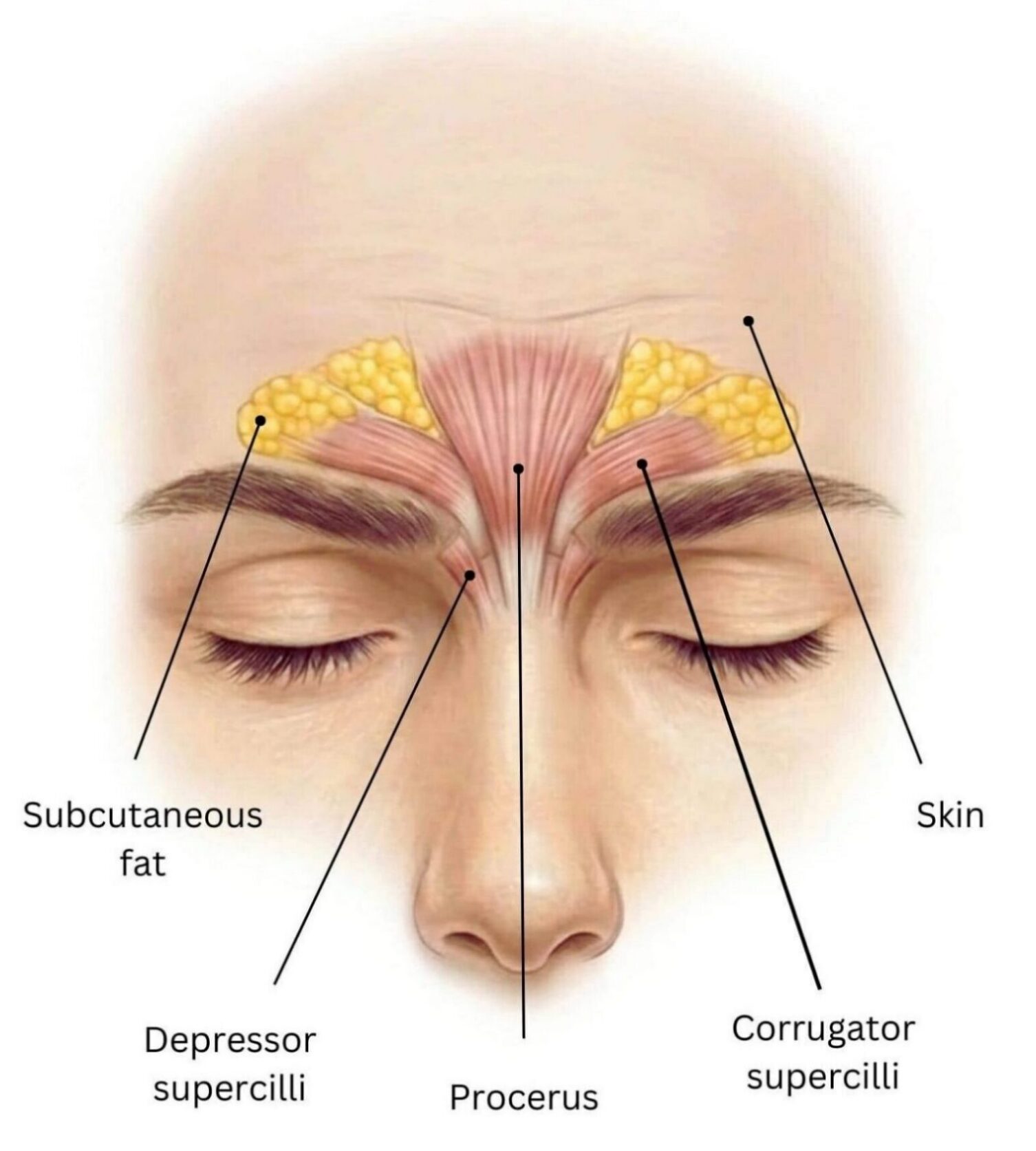
Anatomy diagram showing the corrugator supercilli and procerus muscles responsible for glabellar lines between the eyebrows.

Which muscles contribute to glabellar lines?

Corrugator Supercilli
The corrugator supercilli muscles pulls the eyebrows inward and downward during facial expressions such as concentrating and frowning. Repeated contraction of this muscle can contribute to the vertical lines that form between the eyebrows.

Procerus
The procerus muscle is located between the corrugator supercilli muscles between the brows. When it contracts, it can contribute to horizontal creasing across the bridge of the nose.

Depressor Supercilli
The depressor supercilli muscles are located beneath the inner part of the eyebrow. When frowning, it pulls the inner part of the eyebrow downward.

What causes glabellar lines?

Glabellar lines are the vertical lines between the eyebrows that develop as a result of repeated facial movement combined with natural changes in the skin.

Muscle contraction
When muscles in the brow area contract during expressions such as concentrating or frowning, the skin folds vertically. Over many years, these repeated movements can gradually lead to visible lines forming in the skin.

Skin changes
As the skin ages, collagen and elastin levels gradually decrease. These proteins help maintain the skin's firmness and elasticity. When their levels decline, the skin loses its support and glabellar lines can become more visible.

Other factors
Sun exposure, genetics, and skin quality may also influence how vertical lines form between the eyebrows develop over time.


Dynamic vs Static Lines

Glabellar lines often begin as dynamic lines, meaning they only appear when the facial muscles are actively moving during frowning.

Over time, these lines can become static lines, which remain visible even when the frown muscles are relaxed. This change occurs gradually as the skin structures change with ageing and repeated movements affecting the same area causes vertical wrinkles to become etched into the surface of the skin.


Understanding facial anatomy in the glabellar region

The glabellar complex contains several anatomical layers that contribute to the appearance of vertical lines. These include:

• the outer skin
• the dermis
• subcutaneous tissue
• underlying facial muscles

Changes within these layers during the ageing process can influence how vertical frown lines form and how visible they become over time. Understanding these layers help explain how facial movement interacts with the skin surface and contributes to the appearance of wrinkles.

Ageing changes in the upper face can affect several areas. You can also learn more about forehead wrinkles and lateral canthal wrinkles (eye wrinkles).


Personalised Consultations

Understanding how facial muscles and skin change over time can help explain why lines develop in certain areas of the face.

If you would like a personalised assessment of facial anatomy and ageing changes, a wrinkle reduction consultation provides the opportunity to discuss your individual concerns and determine what treatment options may be appropriate for you. Treatment options and results vary from person-to-person.

Book a consultation

Frequently Asked Questions

Glabellar lines are vertical lines that develop between the eyebrows. They are commonly referred to as frown lines and form due to repeated facial movement and natural changes in the skin over time.

Lines between the eyebrows develop primarily due to repeated contraction of the muscles in the brow region combined with changes in the skin collagen and elasticity as part of the ageing process.

Glabellar lines may begin appearing in the late twenties or thirties, although this varies depending on genetics, skin quality, facial movement patterns, and environmental factors such as sun exposure.

Frequent facial expressions such as frowning or concentrating activate the muscles between the eyebrows, which can contribute to the formation of glabellar lines over time.

The two primary muscles involved are the corrugator supercilli and the procerus muscles, which control movement of the eyebrows and the skin between them.