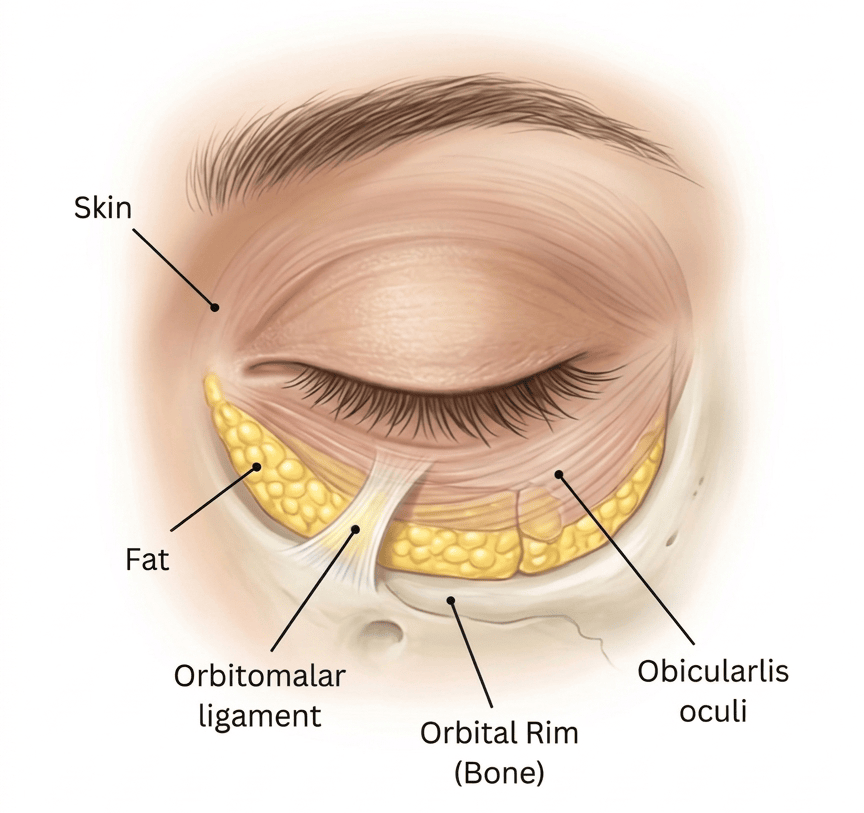
Anatomy of the under-eye
The under-eye area is made up of several anatomical structures, including the skin, fat compartments, ligaments, muscle and underlying bone.
The skin is thinner compared to other ares on the face, allowing underlying vascular structures to be more visible, which can contribute to the appearance of dark under-eye circles.
The obicularis oculi muscle surrounds the eye and plays a key role in facial expression when smiling.
Fat pads support the lower eyelids and help maintain a smooth transition between the lower eyelid and cheek. Changes in the position or prominence of these fat pads over time may influence the appearance of under-eye hollows or fullness.
The underlying bone structure contributes to overall shape and support of the under eye area. Bone resorption may change structural support over time.
Together, these structures influence the appearance of the under-eye area and how it may change over time.