AESTHETIC ULTRASOUND

Aesthetic ultrasound is a non-invasive imaging tool that uses high-frequency sound waves to visualise structures beneath the skin. Unlike surface-only assessments, ultrasound allows practitioners to “see” the anatomy beneath the facial layers — including muscles, fat compartments, and blood vessels — providing deeper insight into your individual anatomy.

At MD Cosmetic Nurse, ultrasound is used as part of the consultation process in select volume loss treatments to support personalised planning, enhance anatomical understanding, and inform safe aesthetic care.

What Is Aesthetic Ultrasound?

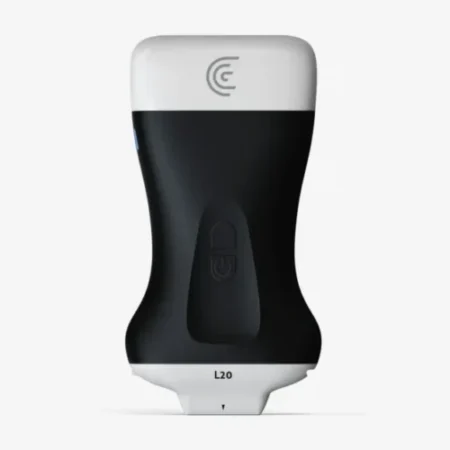
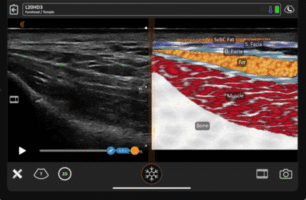
Aesthetic ultrasound uses sound waves to generate real-time images of the skin’s internal structures. The probe emits high-frequency waves that penetrate through layers of tissue. These waves reflect off different structures and are transformed into images that reveal muscle, fat, bone, and vascular anatomy beneath the surface.

Unlike X-rays or radiation-based imaging, ultrasound is completely radiation-free and uses sound waves, making it a safe diagnostic tool.
How Ultrasound Enhances Facial Assessment

Ultrasound enables us to understand your individual facial anatomy in more detail than visual assessment alone. This includes identifying:

- The thickness of various tissue layers
- Location of arteries and important vascular structures
- Muscle and fat compartments
- Anatomical variations unique to your face

These insights help inform safer, more personalised aesthetic planning. While ultrasound does not guarantee that treatments will be without risk, it enhances anatomical understanding and supports careful decision-making.


Aesthetic Ultrasound in Sydney
Aesthetic Ultrasound imaging in Sydney

How We Use Ultrasound at MD Cosmetic Nurse

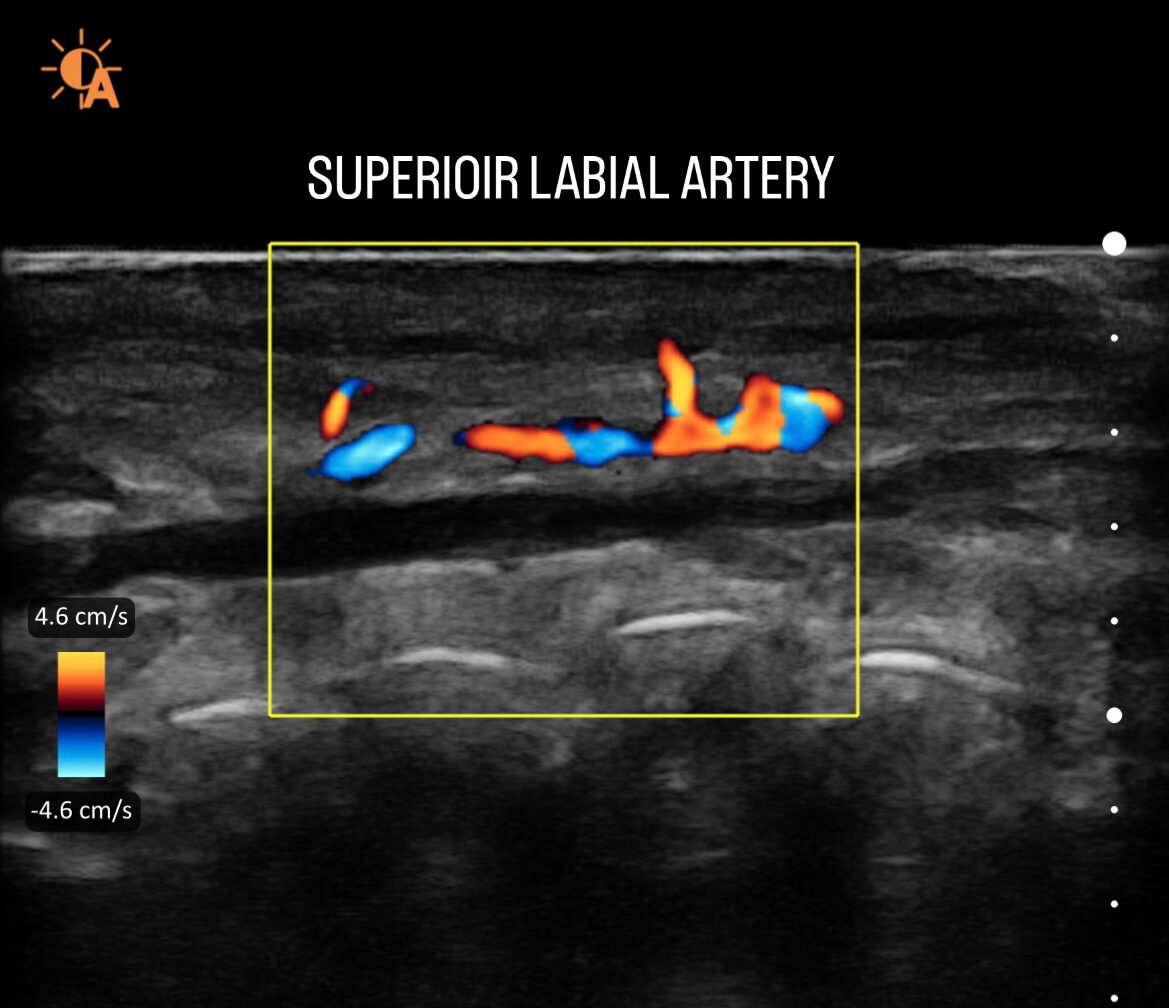
Ultrasound is most commonly used for vascular mapping prior to select volume loss treatments. Vascular mapping refers to using ultrasound to identify where key blood vessels lie under the intended treatment area. This provides additional anatomical context that helps guide planning and conversation during your consultation.

Ultrasound is not used to perform volume loss treatment themselves, nor is it used to diagnose medical conditions or locate foreign bodies under the skin. However, by incorporating imaging data into your personalised assessment, we can plan treatments with more detailed anatomical insight than surface evaluation alone.

Ultrasound Procedures

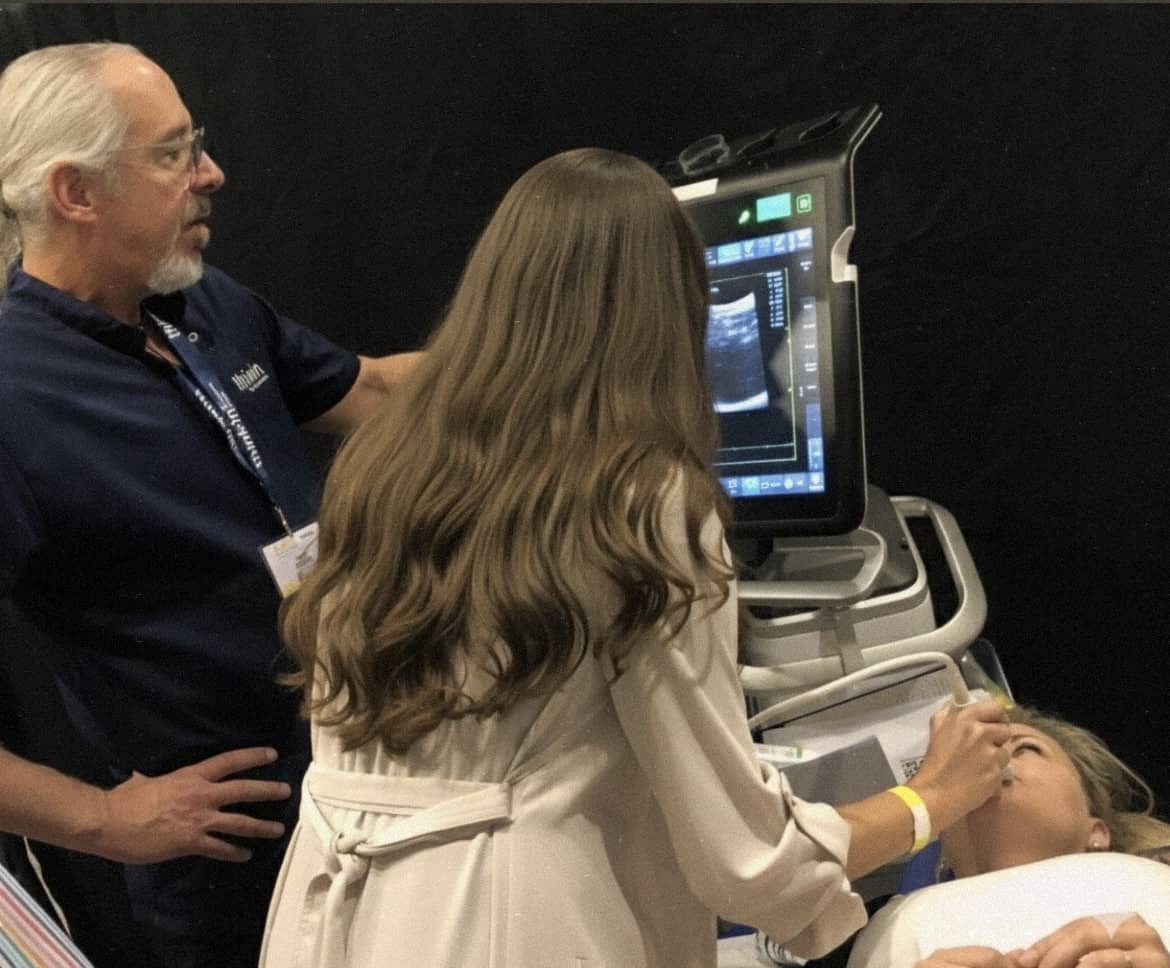
When ultrasound is performed, a small amount of clear gel is applied to the skin, and a handheld probe is gently moved over the area. Unlike some imaging tools, ultrasound does not involve radiation, and it typically does not cause discomfort. The sensation is similar to a cool gel sliding across the skin.

What Ultrasound Does Not Do

Ultrasound imaging used in aesthetic assessments is not a treatment in itself. It does not alter your skin, nor does it eliminate all risk associated with medical procedures. Ultrasound does not replace clinical judgment or expertise, but it supports deeper anatomical awareness that can inform safer treatment planning for select volume loss procedures.

Volume Loss Consultations

Why Ultrasound Matters in Aesthetic Care

Understanding individual facial anatomy is an important part of safe, personalised aesthetic planning. Because no two faces are the same, ultrasound can help:

- Identify individual variations in vascular pathways
- Highlight areas where tissue layers differ from generalised anatomy
- Inform safer placement strategies for treatment plans
- Provide confidence-building insight during consultation

Clinical evidence suggests that ultrasound imaging can support precision and anatomical understanding in aesthetic procedures.


Benefits of using aesthetic Ultrasound

An ultrasound consultation may be particularly valuable if you’re considering volume loss consultations and want:

- A deeper understanding of your unique facial anatomy
- Anatomic insight to support personalised planning
- Confidence in your treatment recommendations
- A discussion about anatomy beyond surface evaluation

Ultrasound offers an added layer of anatomical clarity when used as part of a comprehensive consultation.


Ultrasound Training

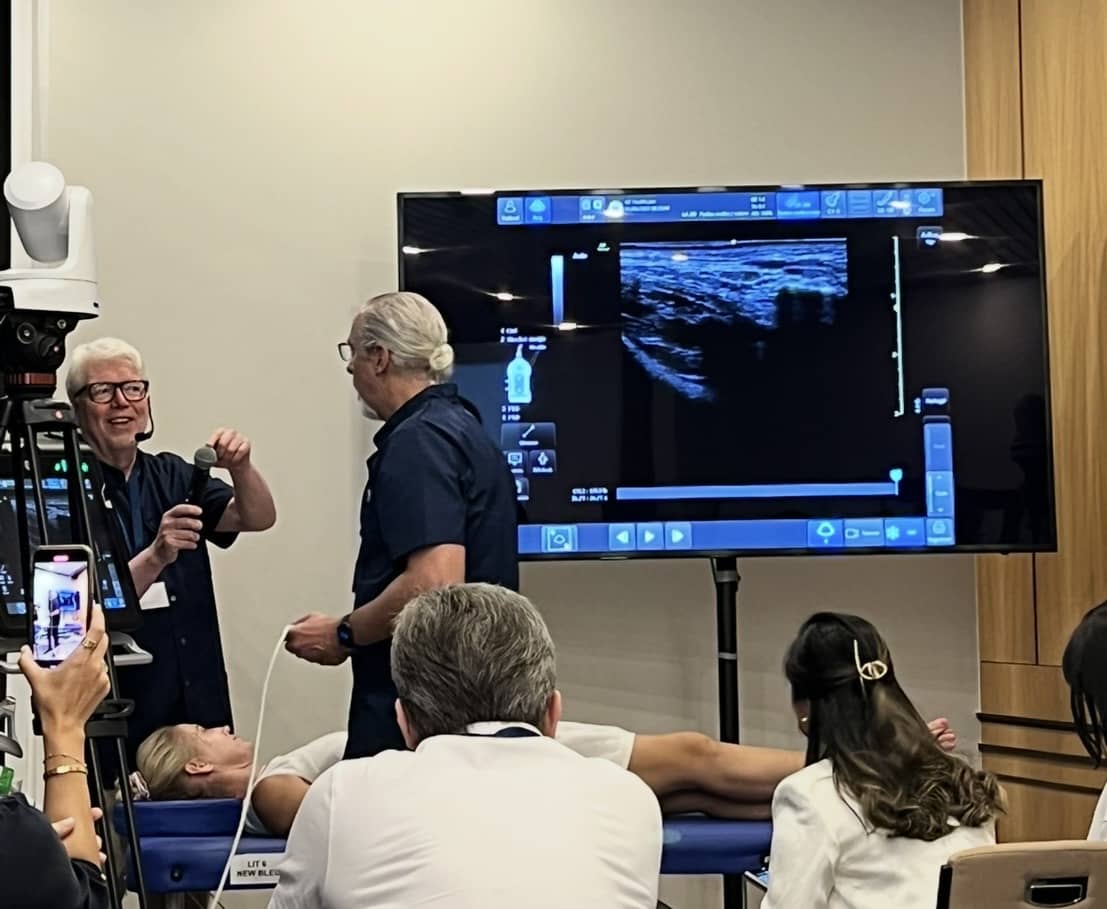
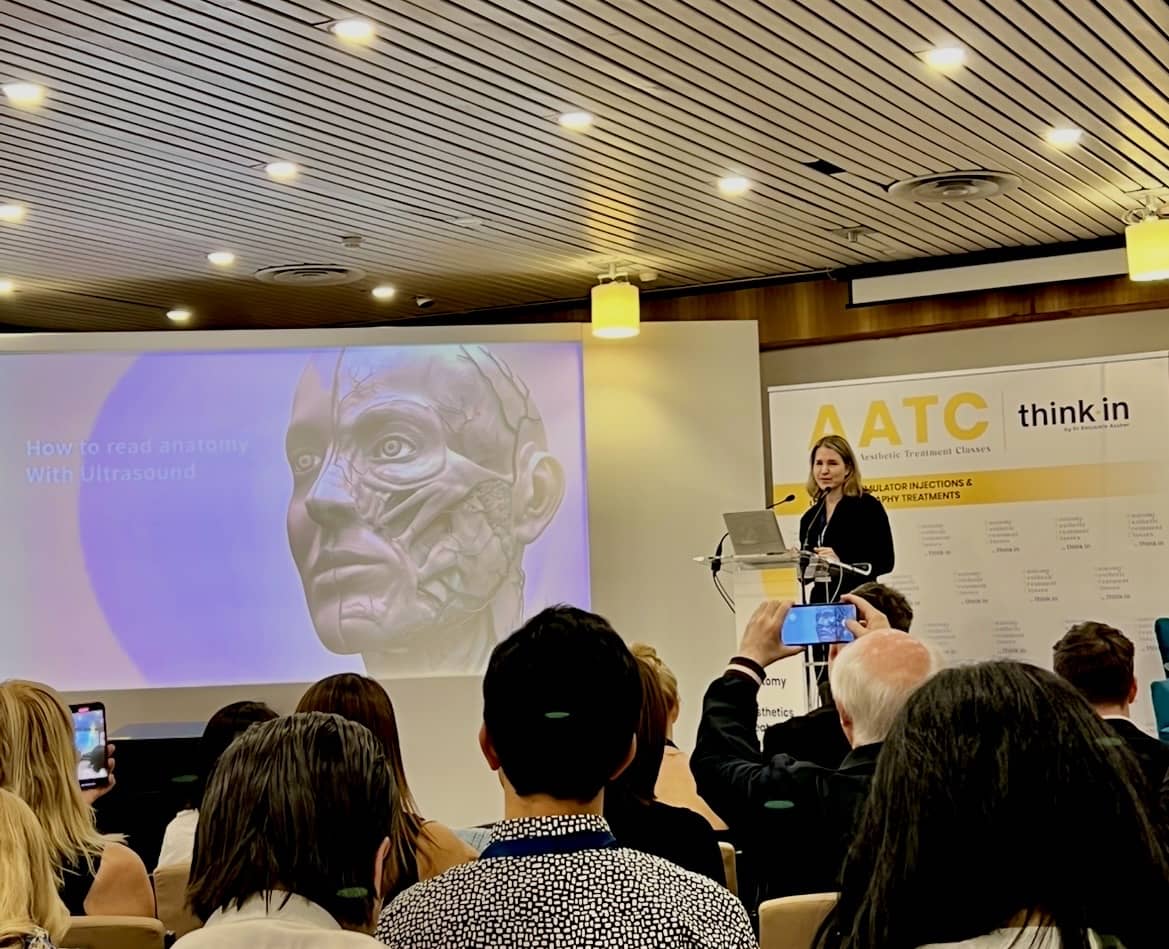
Michelle has completed specialised ultrasound training in Paris under internationally recognised experts in medical aesthetic ultrasound, including Dr. Peter Velthuis (Netherlands), Dr. Steven Weiner (USA), Dr. Leonie Schelke (Netherlands), and Dr. Stella Desyatnikova (USA).

Book Your Ultrasound Consultation

If you’re interested in a consultation that incorporates ultrasound to enhance anatomical understanding and planning, book your consultation with MD Cosmetic Nurse in Sydney. A detailed facial assessment can help shape a treatment plan that aligns with your goals and provides peace of mind.

Book A Consultation

Aesthetic Ultrasound FAQ

Aesthetic ultrasound may be used as part of the volume loss consultation and assessment process to visualise structures beneath the skin, such as tissue layers and blood vessels. This supports personalised planning and enhances anatomical understanding prior to certain aesthetic treatments.

Yes. Ultrasound is a non-invasive imaging technique that uses sound waves rather than radiation. It has been used safely in medical settings for many years and is considered a low-risk diagnostic tool when used appropriately.

No. While ultrasound provides additional anatomical insight, it does not eliminate all risks associated with aesthetic procedures. It is used to support informed decision-making and careful planning, alongside clinical assessment and practitioner experience.

Ultrasound is not required for all patients or treatments. It is used selectively, depending on individual anatomy, treatment history, and the areas being considered. Suitability for ultrasound assessment is discussed during your consultation.

An ultrasound assessment involves applying a small amount of gel to the skin and gently moving a handheld probe over the area. It is generally does not involve discomfort.

Yes. Ultrasound may be particularly useful for patients who have had previous aesthetic treatments, as it can provide additional insight into underlying anatomy. This is assessed on an individual basis during your consultation.

No. Ultrasound is a supportive tool and does not replace clinical judgment or expertise. It is used alongside a comprehensive consultation, facial assessment, and medical history review.

MD Cosmetic Nurse may use ultrasound to 'vascular map' her patients prior to some treatments. 'Vascular mapping' refers to using the ultrasound device on the area/s intended to be treated to identify the location of anatomical structures.

At MD Cosmetic Nurse, we do not use ultrasound to locate/ identify structures (including implant or foreign body substances), or make and diagnosis of them.

At MD Cosmetic Nurse, we do not perform any treatments under ultrasound guidance.